IRctc web revamp
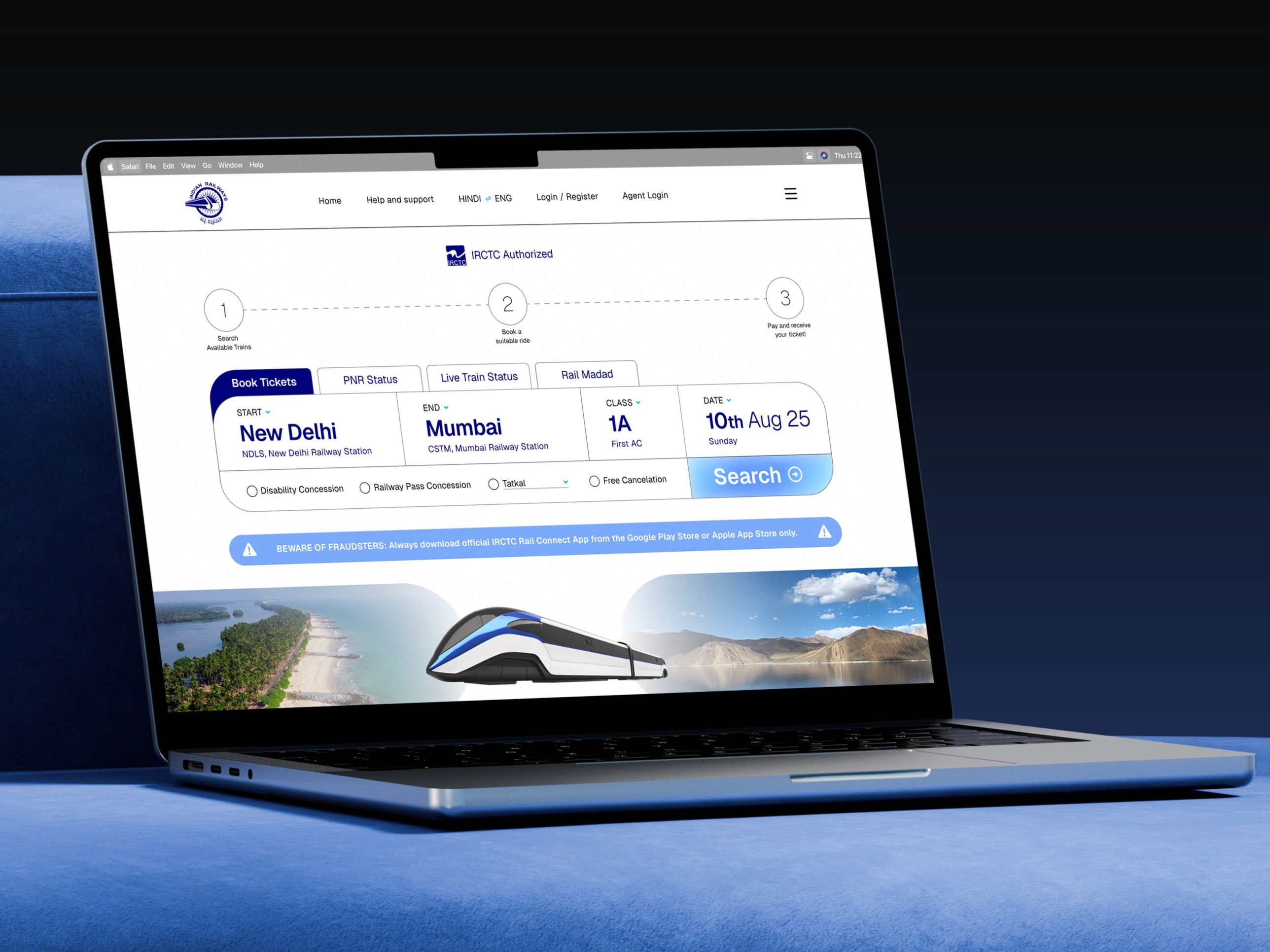
A UX modernization of the IRCTC platform, serving 30M+ monthly users. This project focuses on transitioning a legacy system into a high-performance, inclusive interface that matches the intuitive standards of India’s leading digital apps.
Website
Mobile App
Content
2025
Year
Retail
Industry
UK, London
scascac
LSG Ad Agency
Client
LSG Ad Agency
Client

Check mobile version
Problem Statement
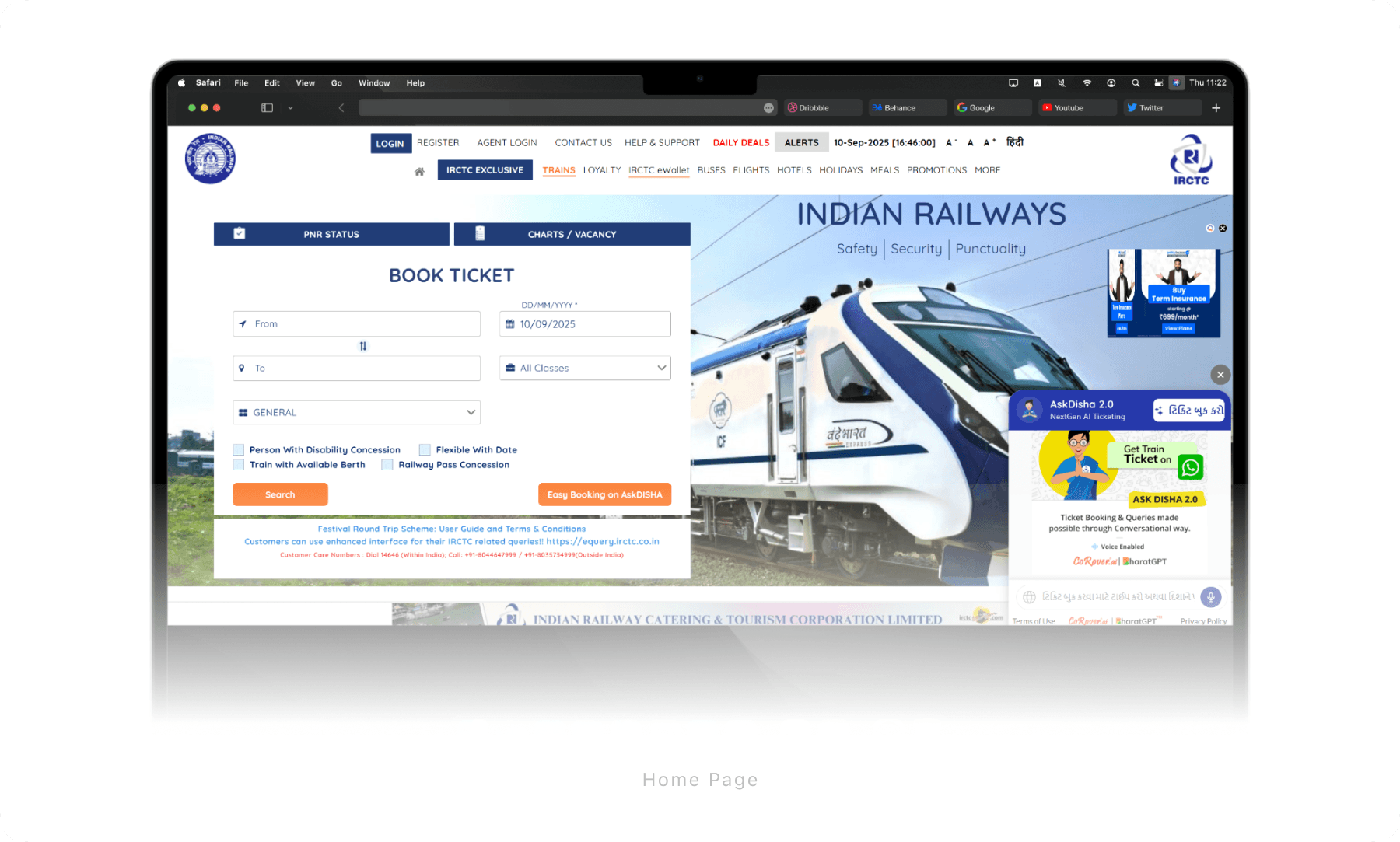
Despite its massive scale, IRCTC’s cluttered interface creates significant friction for beginners and semi-urban users. The current "chaos-driven" design hinders accessibility, forcing users to navigate a steep learning curve that contradicts modern Indian digital standards.
Research
KEY INSIGHT
Heuristic Evaluation:
UI & UX Friction
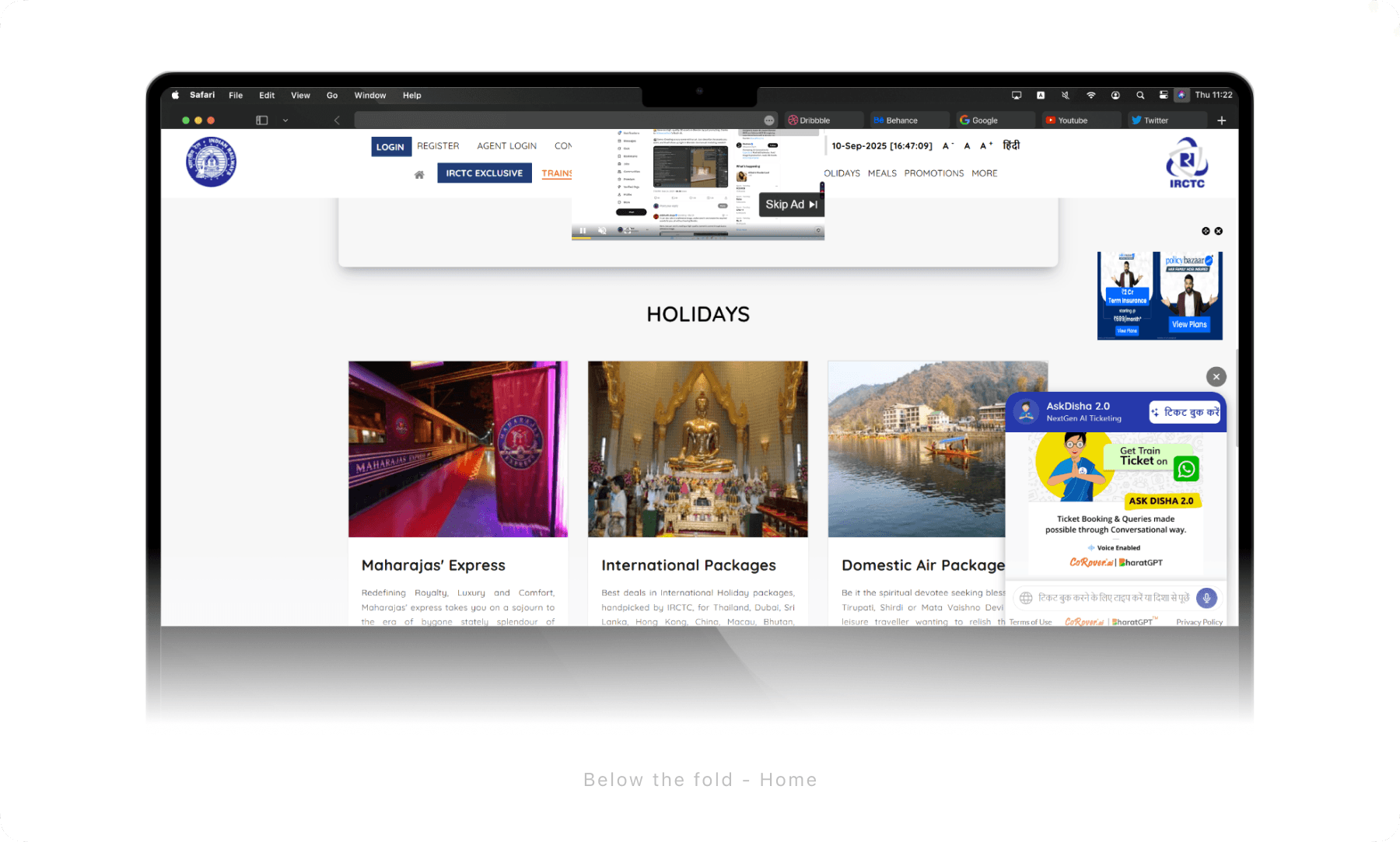
Visual Noise: Cluttered interface with inconsistent styling and poor contrast.
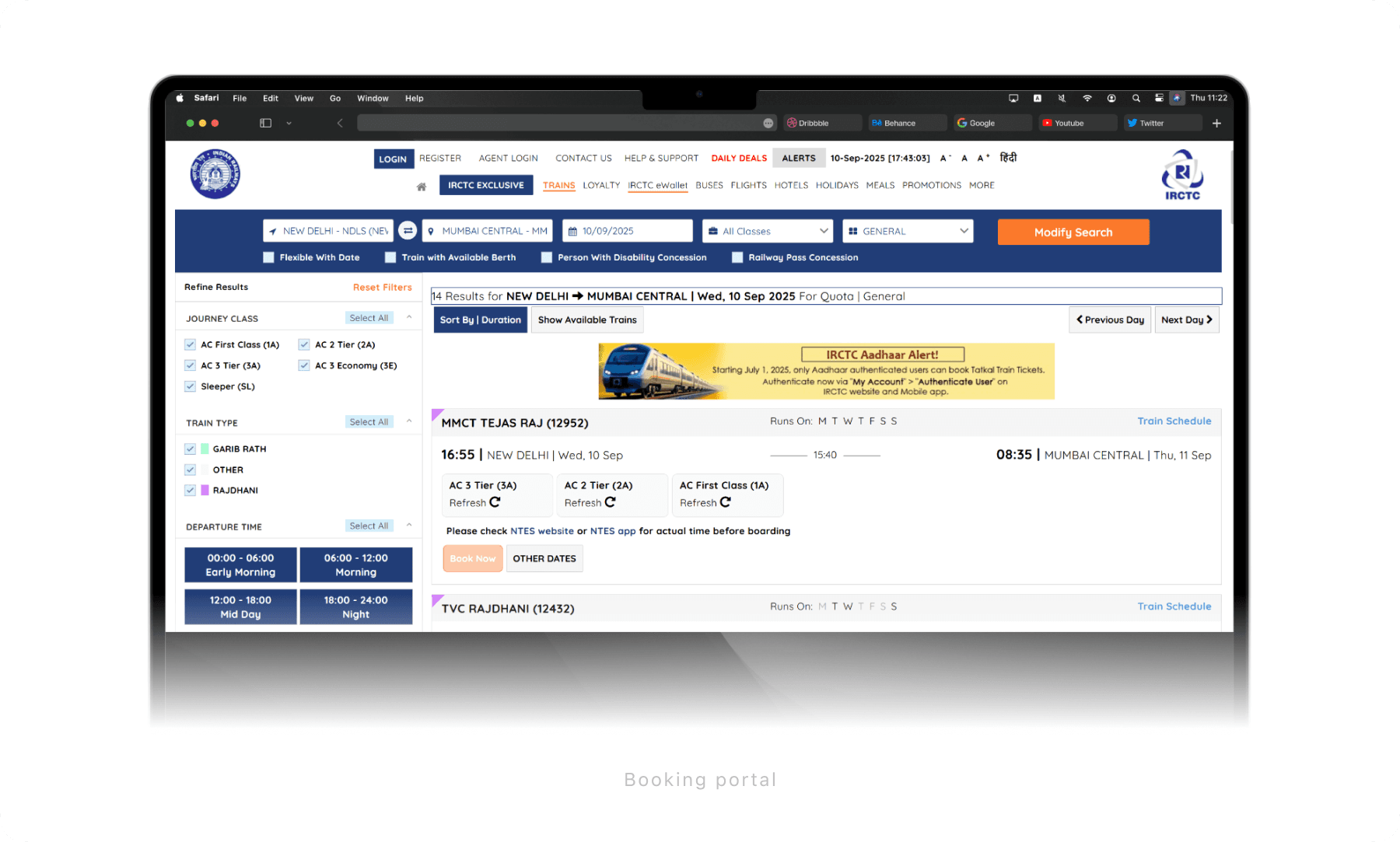
System Fragility: High-load failure (Tatkal) and weak feedback loops.
Navigation: Critical flows (PNR, refunds) are buried or disconnected.
Usability & Accessibility Gaps
Process Risk: Unreliable payment feedback and abrupt account disruptions.
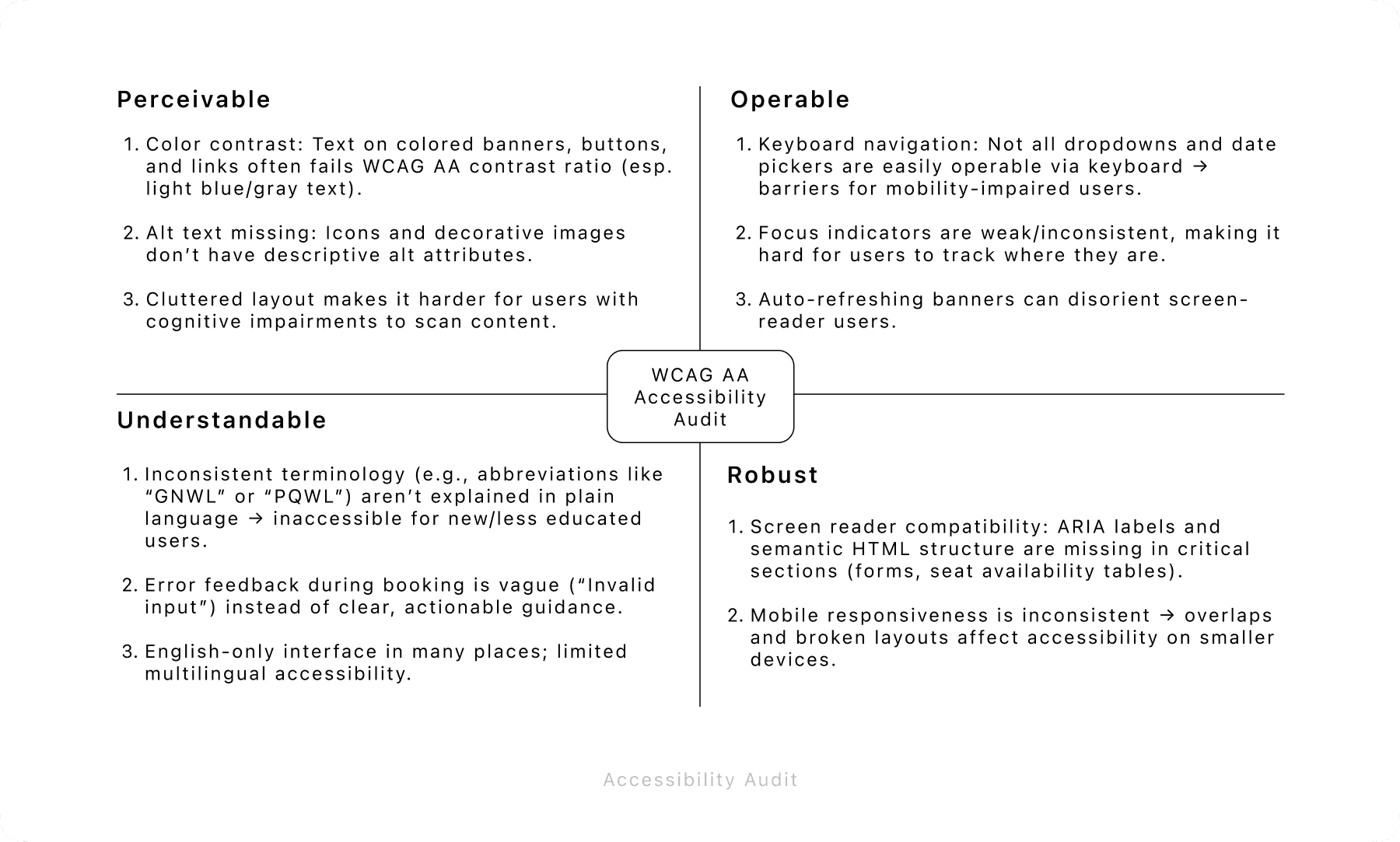
Inclusivity Barriers: Poor screen reader support, missing focus indicators, and incomplete keyboard navigation.
Responsive Lack: Inconsistent experience across mobile and desktop.
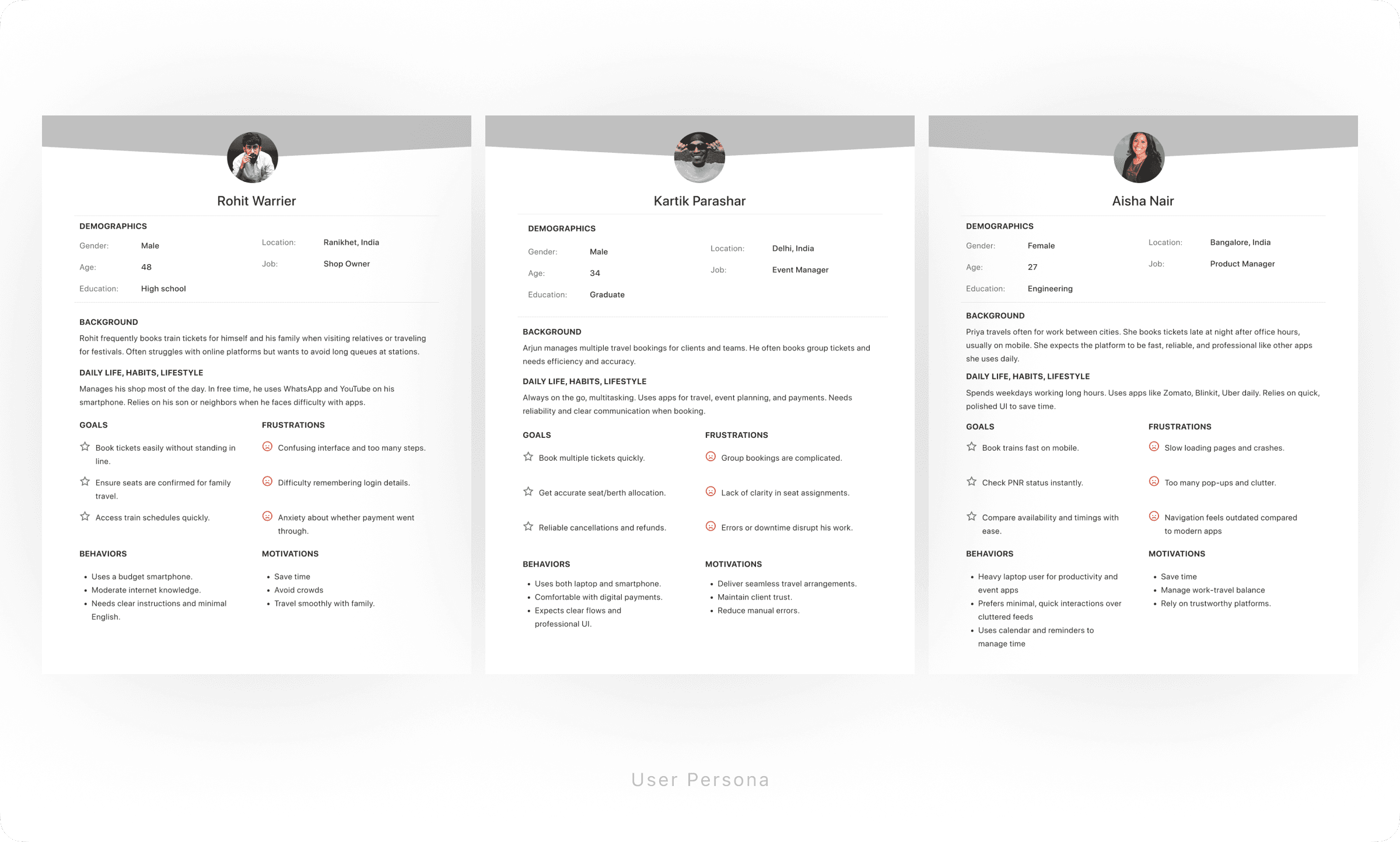
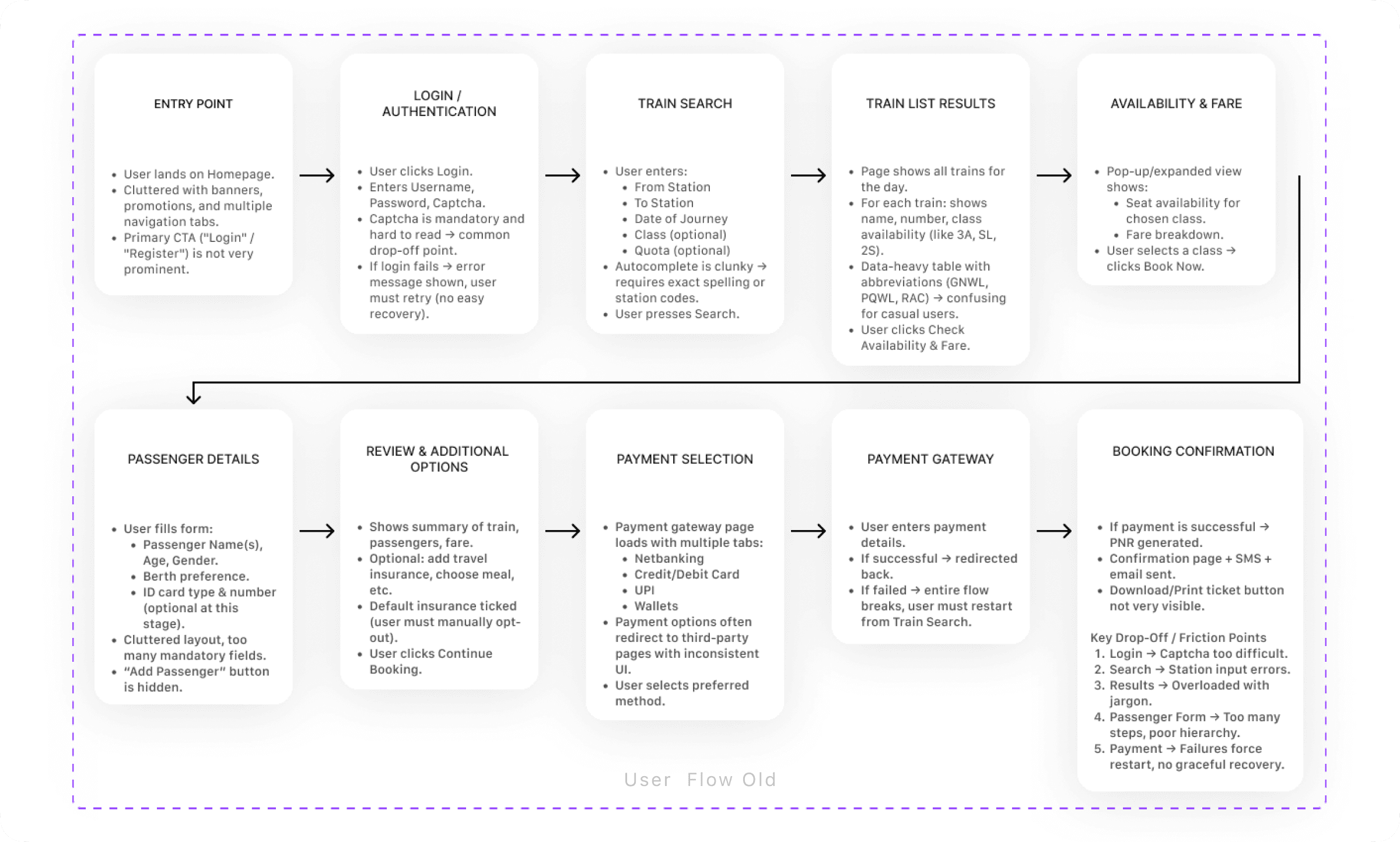
Summarized : The research shows that IRCTC’s current design overwhelms users with clutter, unclear flows, and outdated UI patterns. Booking's already a stressful, time-sensitive task is made harder by poor usability and mobile performance. Users are eager for a streamlined, modern interface that provides clarity, confidence, and accessibility across devices.
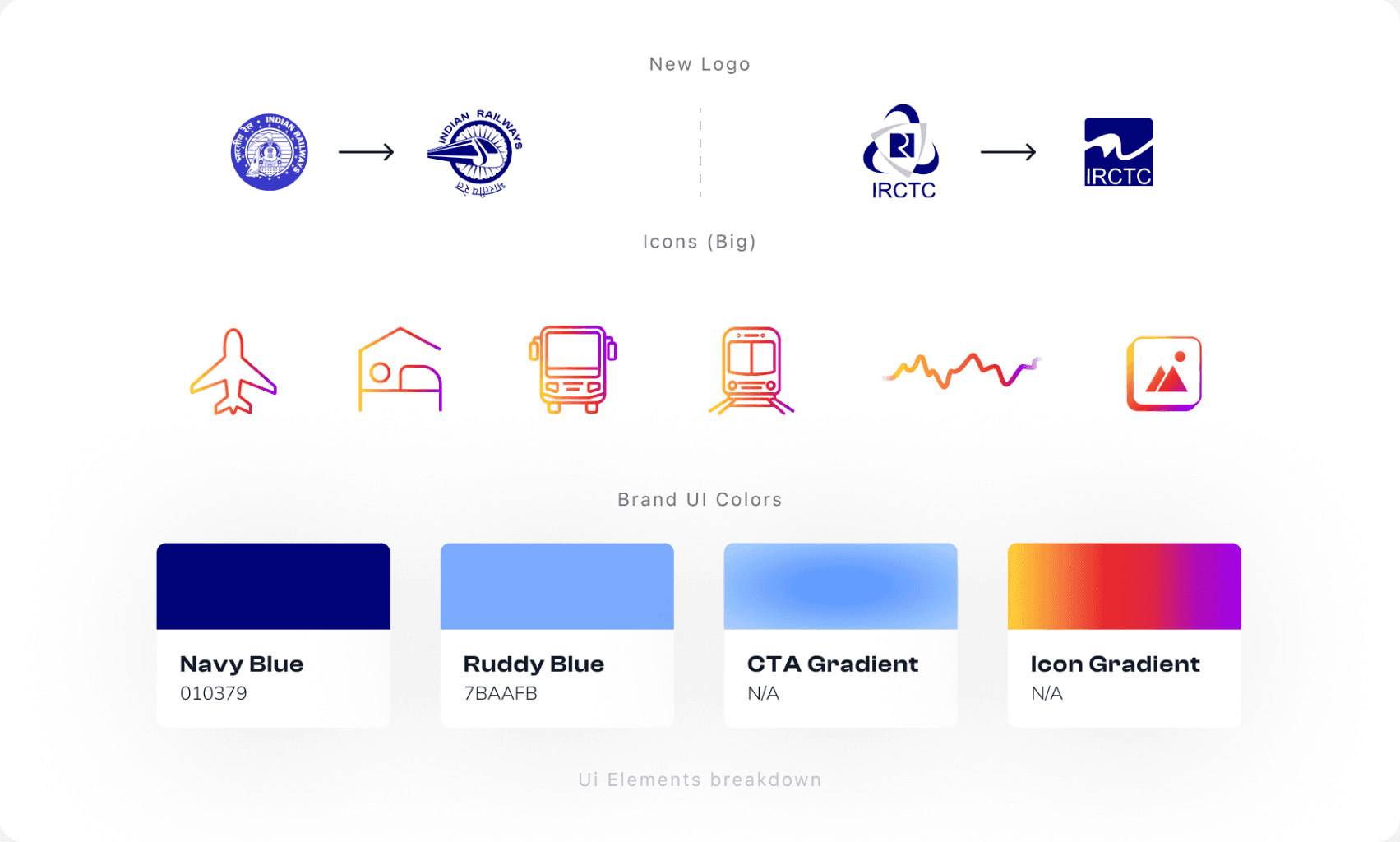
Modernized logos, consistent brand colors, and gradient-based icons establish visual identity while maintaining clarity. This eliminates IRCTC’s visual inconsistency, making navigation intuitive and aiding accessibility with higher-contrast palettes.
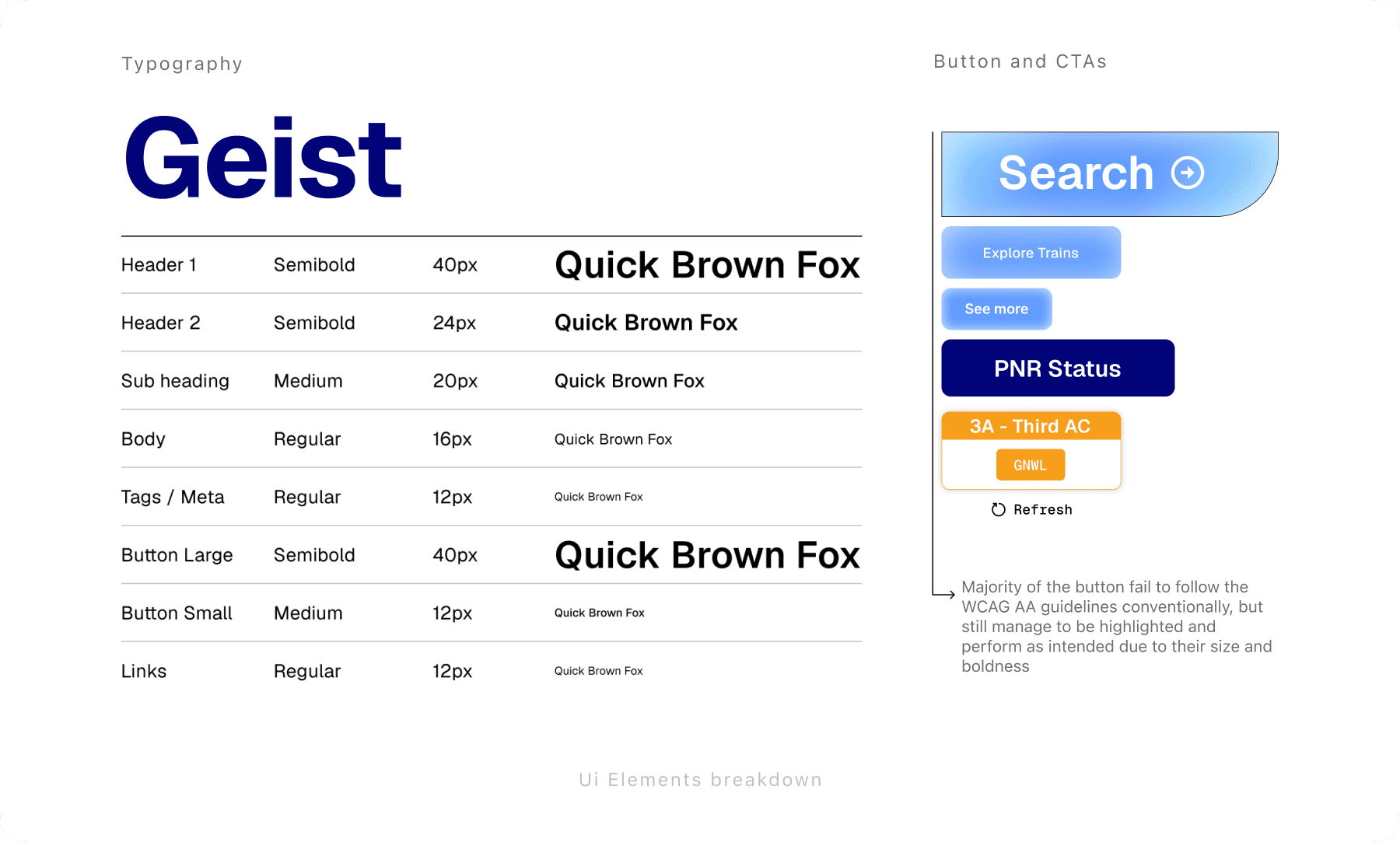
A unified type system with strong hierarchy enhances readability, solving poor contrast and small text problems (Improves accessibility for a broad audience). Bold, accessible buttons with large hit areas increase usability across devices, reducing booking failures caused by unclear CTAs.
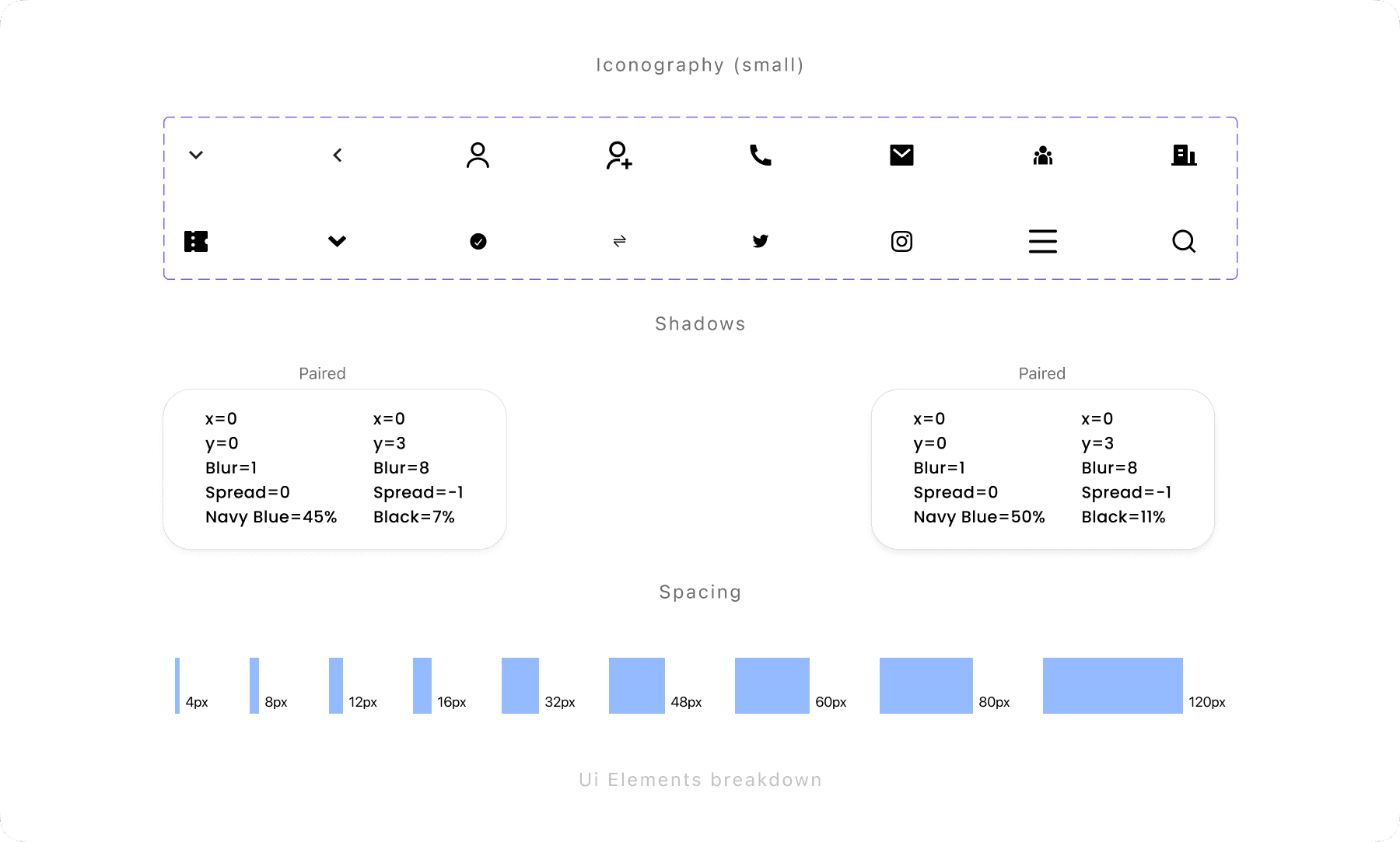
Consistent iconography and systematic spacing create visual rhythm, reducing cognitive load. This directly solves IRCTC’s inconsistent styling issue, while also improving accessibility by offering recognizable, scalable icons with better click targets.
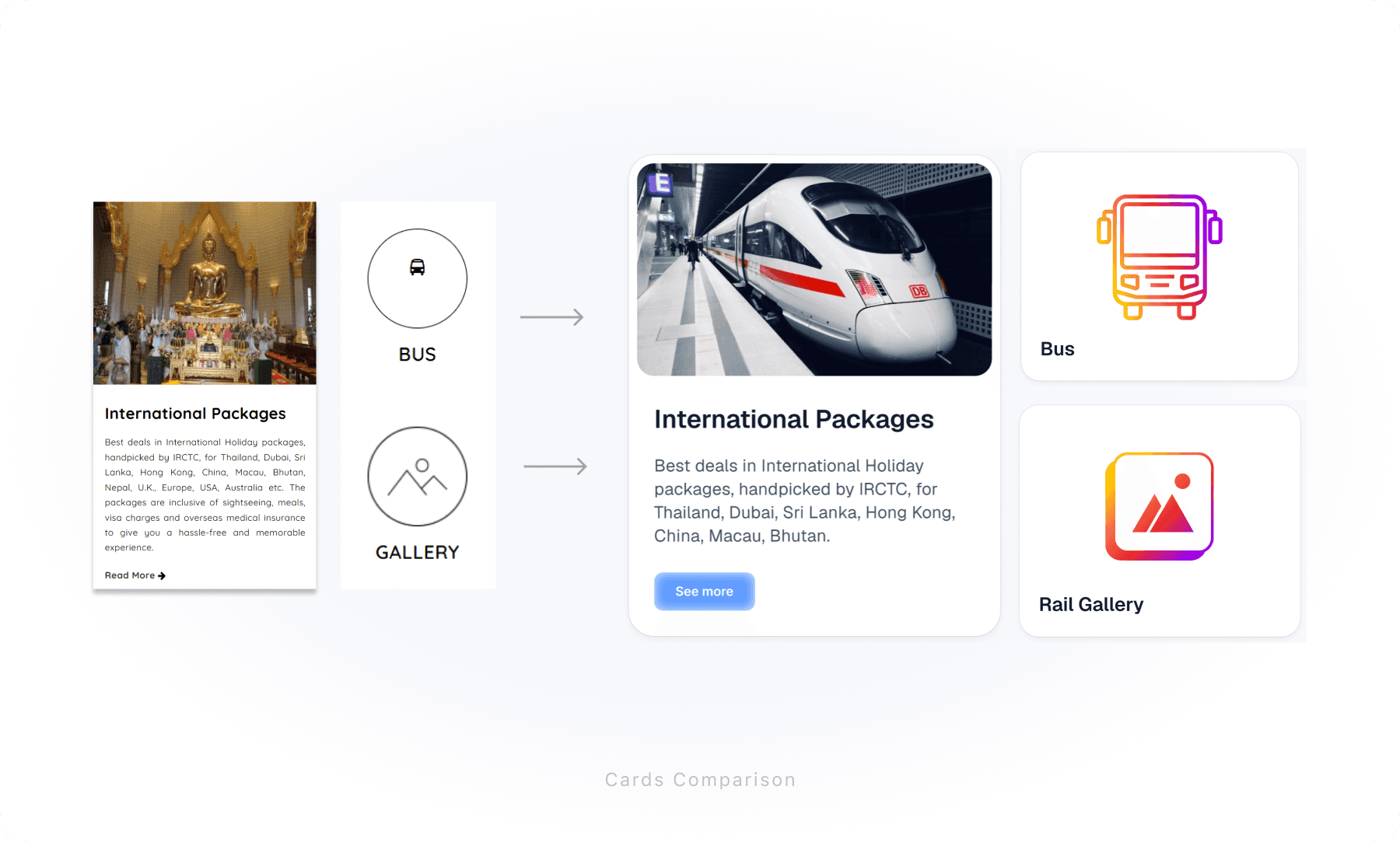
The redesigned cards simplify visual hierarchy with clear images, concise text, and bold CTAs, reducing clutter. This solves IRCTC’s UI problem of information overload by making packages scannable and engaging, improving usability and accessibility with better contrast and icon clarity.
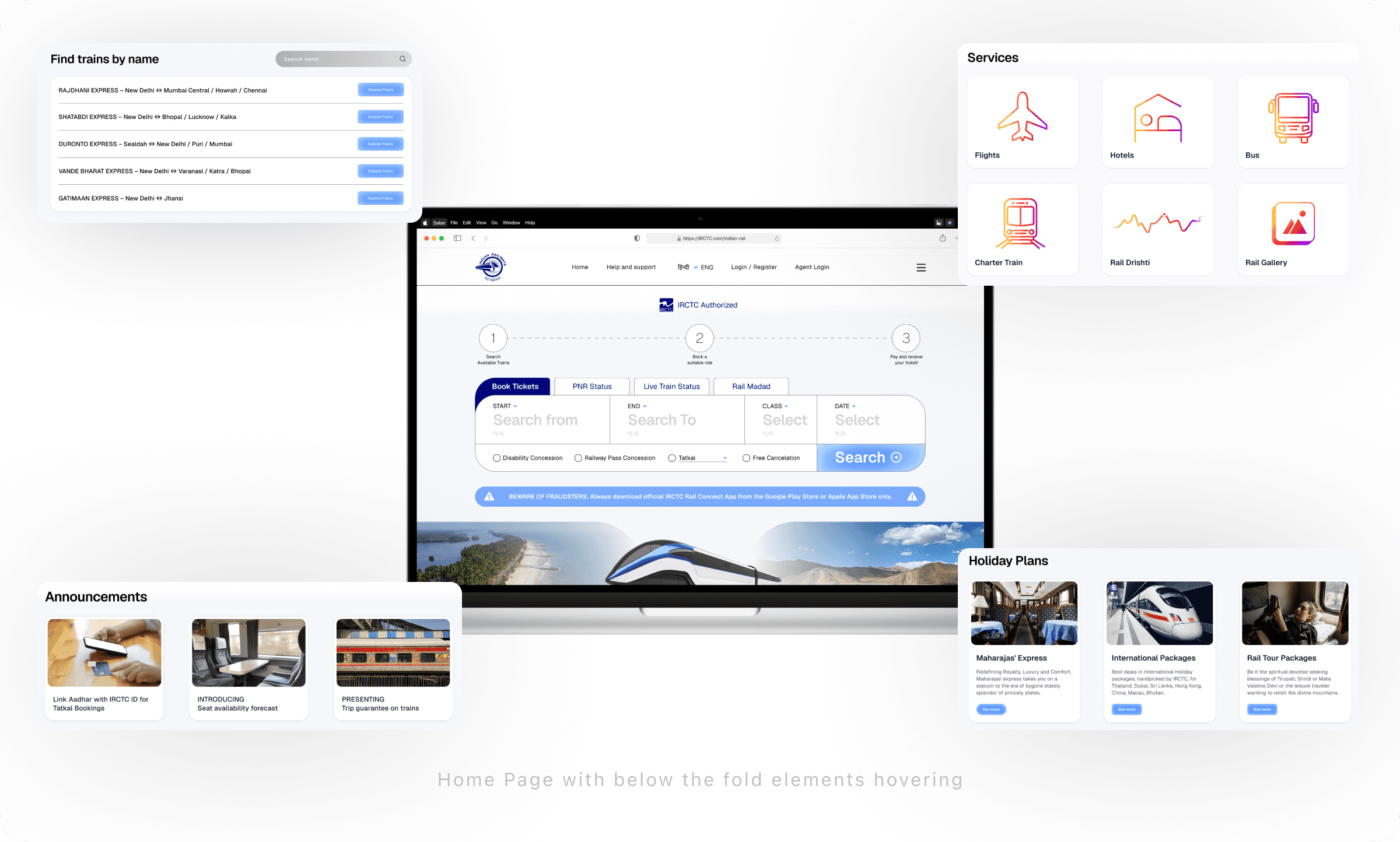
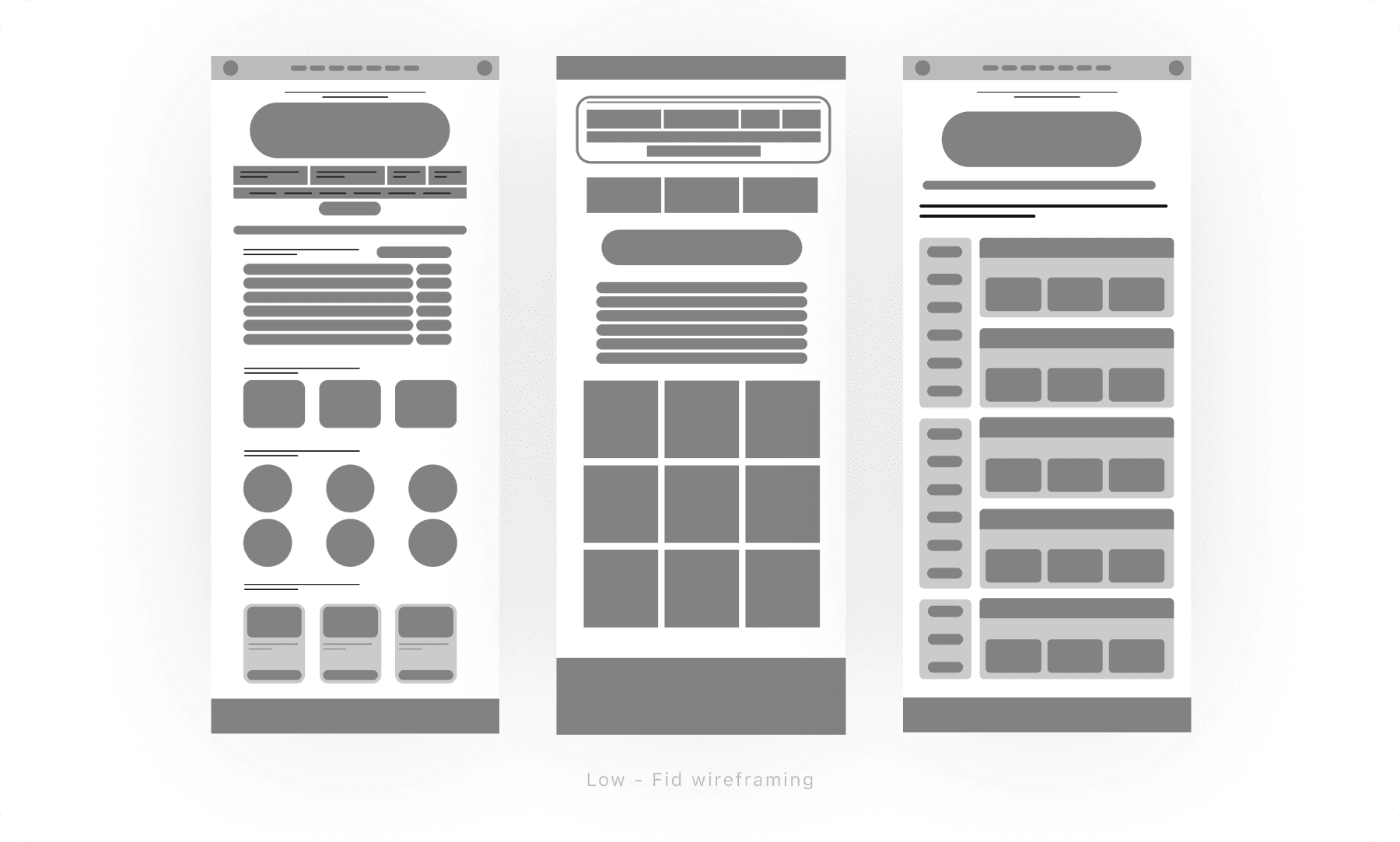
The clean homepage prioritizes ticket booking with smart search and minimal distractions, unlike IRCTC’s banner-heavy entry point. Hover-access services and announcements improve navigation clarity while maintaining brand consistency across devices.

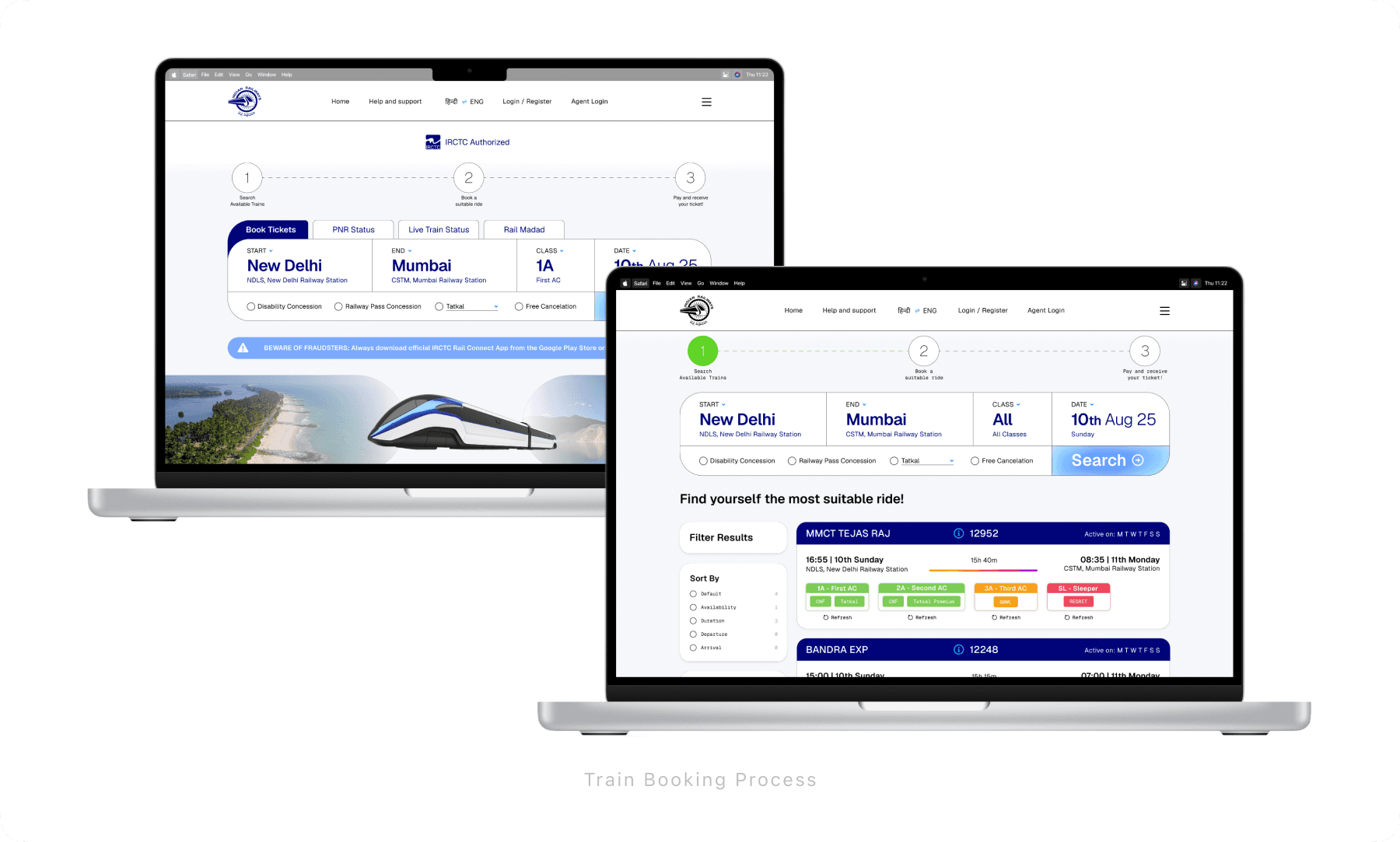
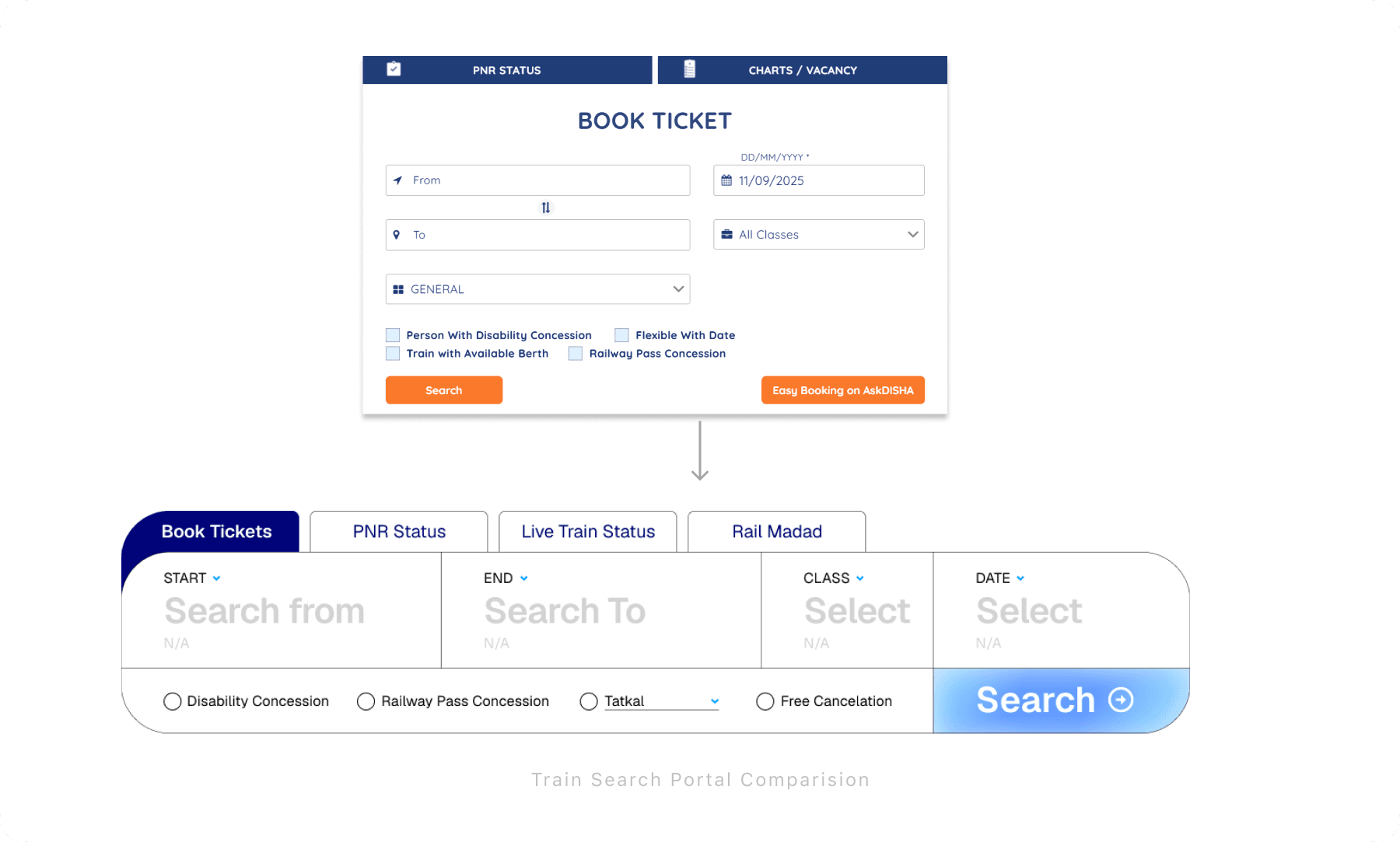
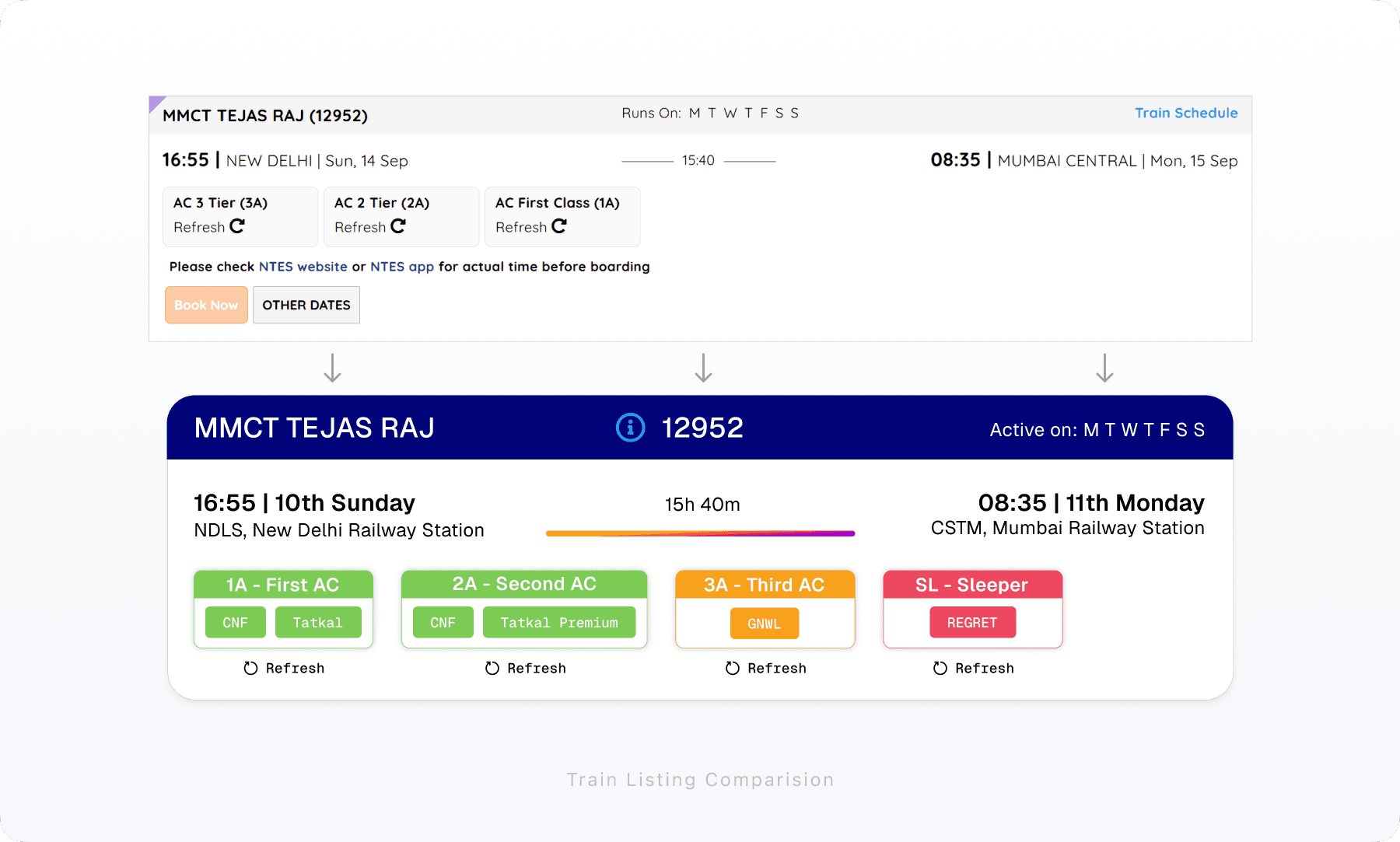
By separating inputs and showing filtered results with clarity, this design removes clutter and inconsistent styling. It tackles decision fatigue by displaying relevant train classes and statuses upfront, making selection effortless. Using green, yellow, and red colors to signify which train seat availability implies, even if one isn't educated about them, this again provides clarity in the decision-making process and reduces mistakes.

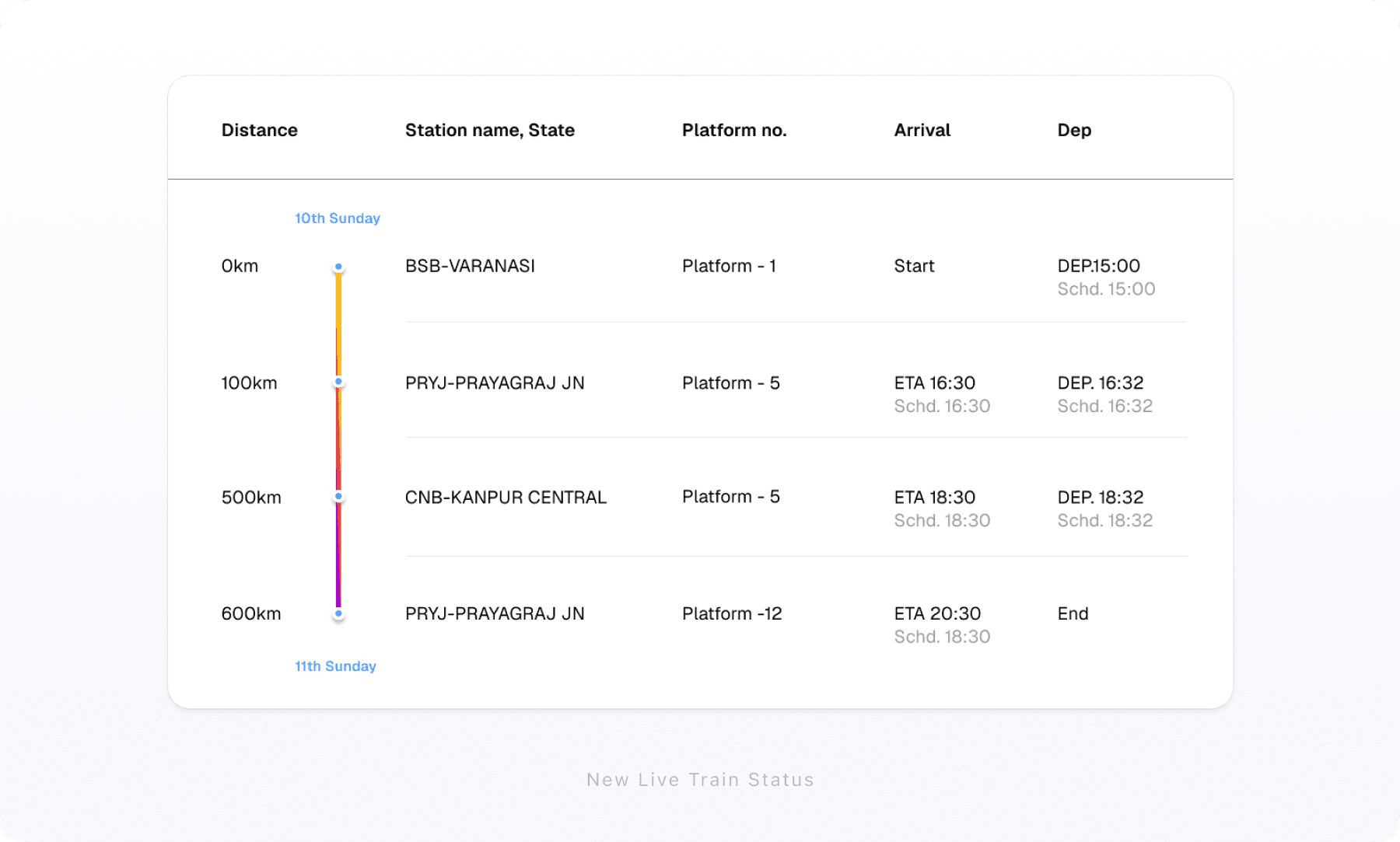
This design presents real-time train updates in a structured, readable format. It directly addresses the problem of unclear navigation and weak feedback by giving precise, accessible information without extra noise.

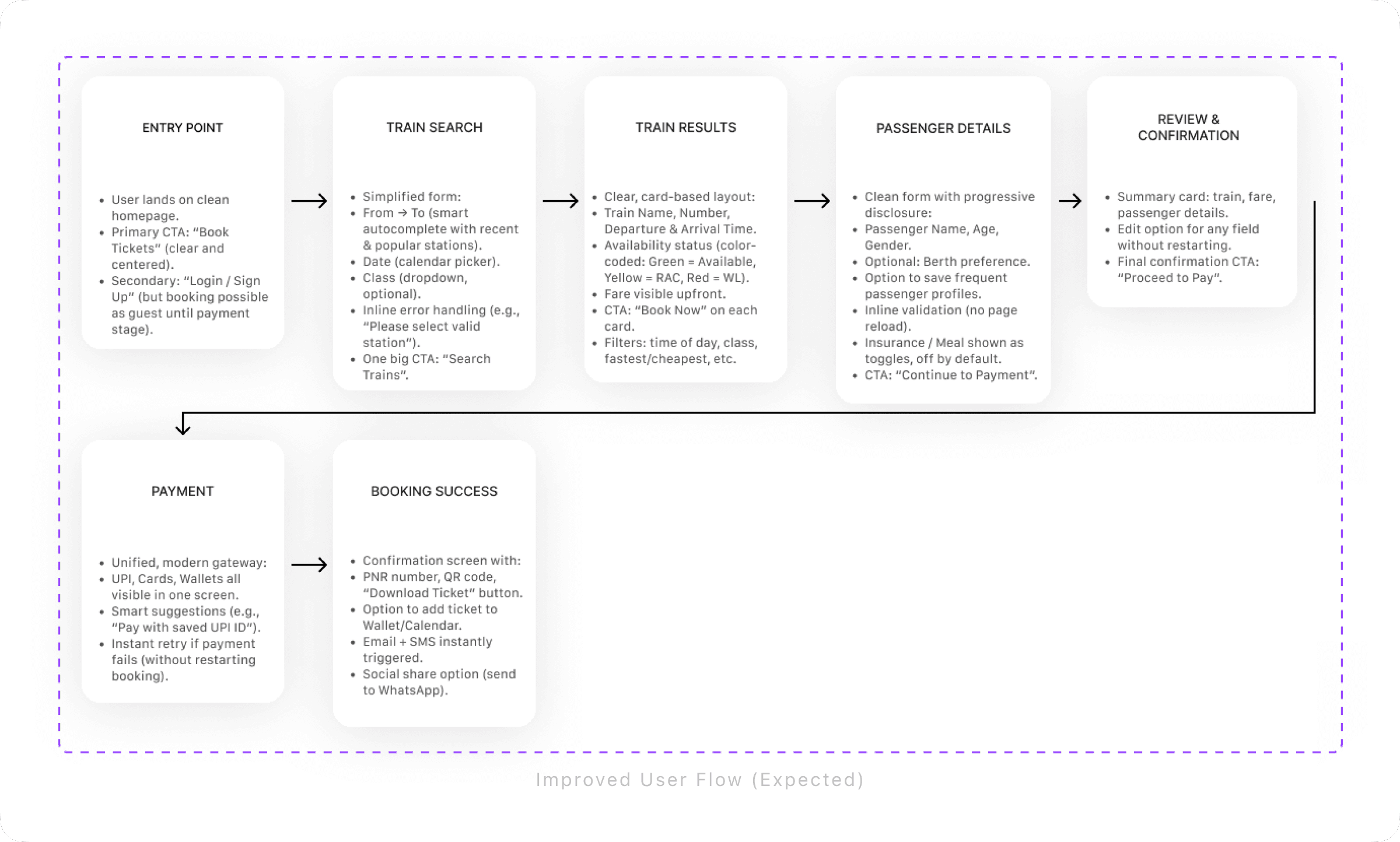
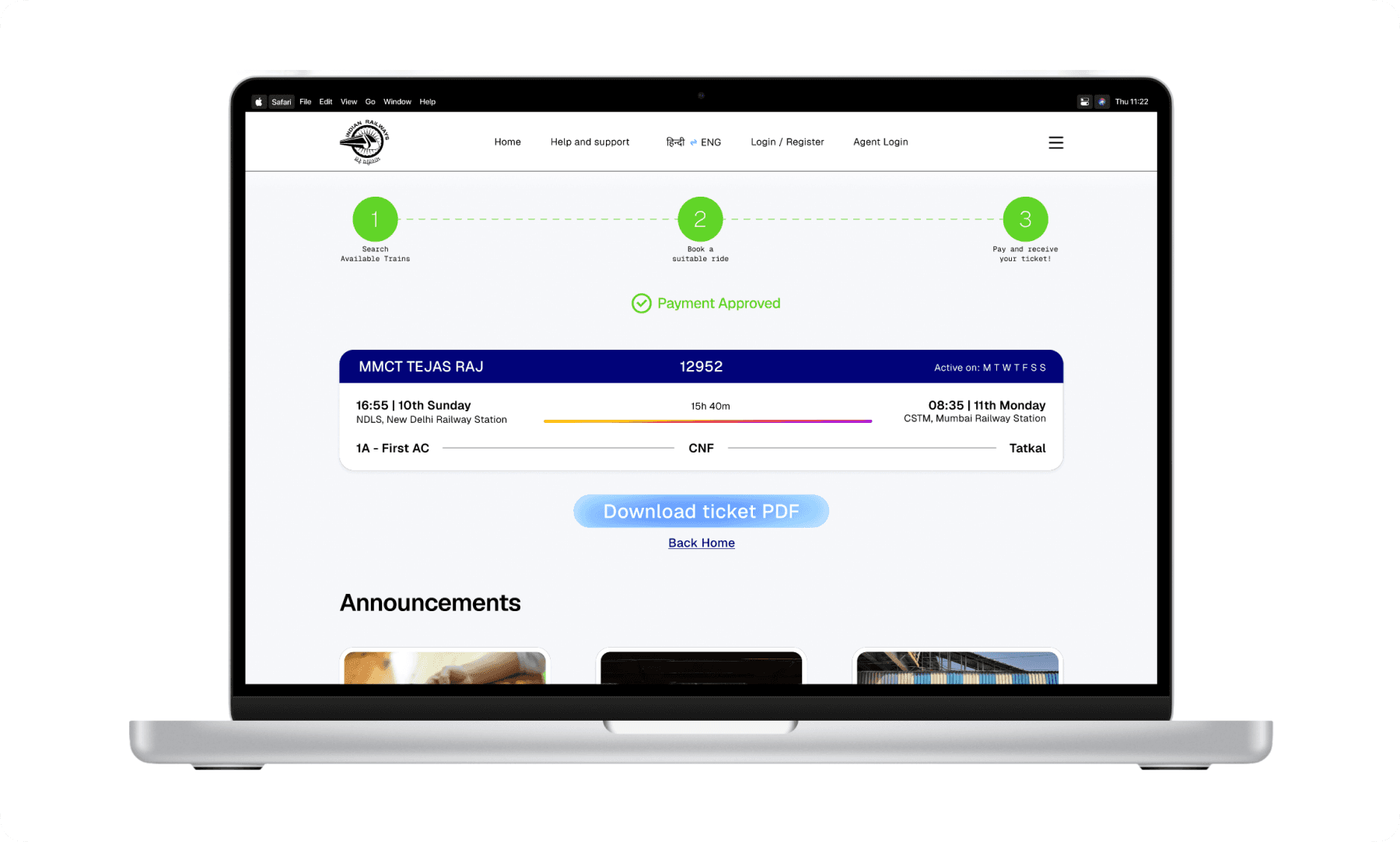
The structured gateway with multiple options solves unpredictability in payments. Clear separation of login, passenger info, and payment reduces friction and provides strong progress indicators compared to IRCTC’s disorganized checkout, all in all clean layout without stressing the user, and not letting them feel lost as the status bar on top provides double reassurance.
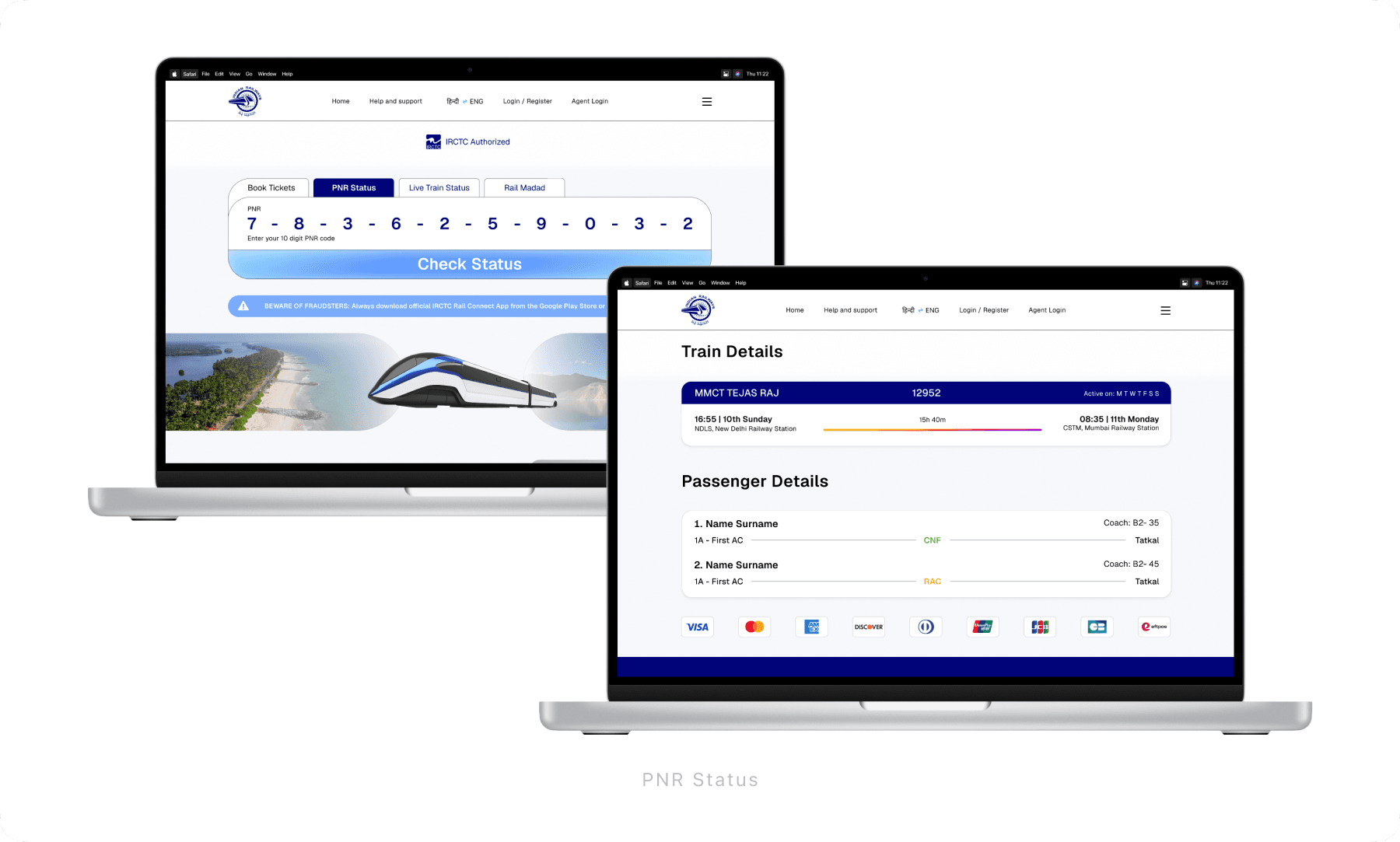
The simplified PNR input and clean passenger details improve legibility and reduce clutter. It solves usability gaps by making booking status instantly clear, unlike IRCTC’s cluttered tables that overwhelm users.
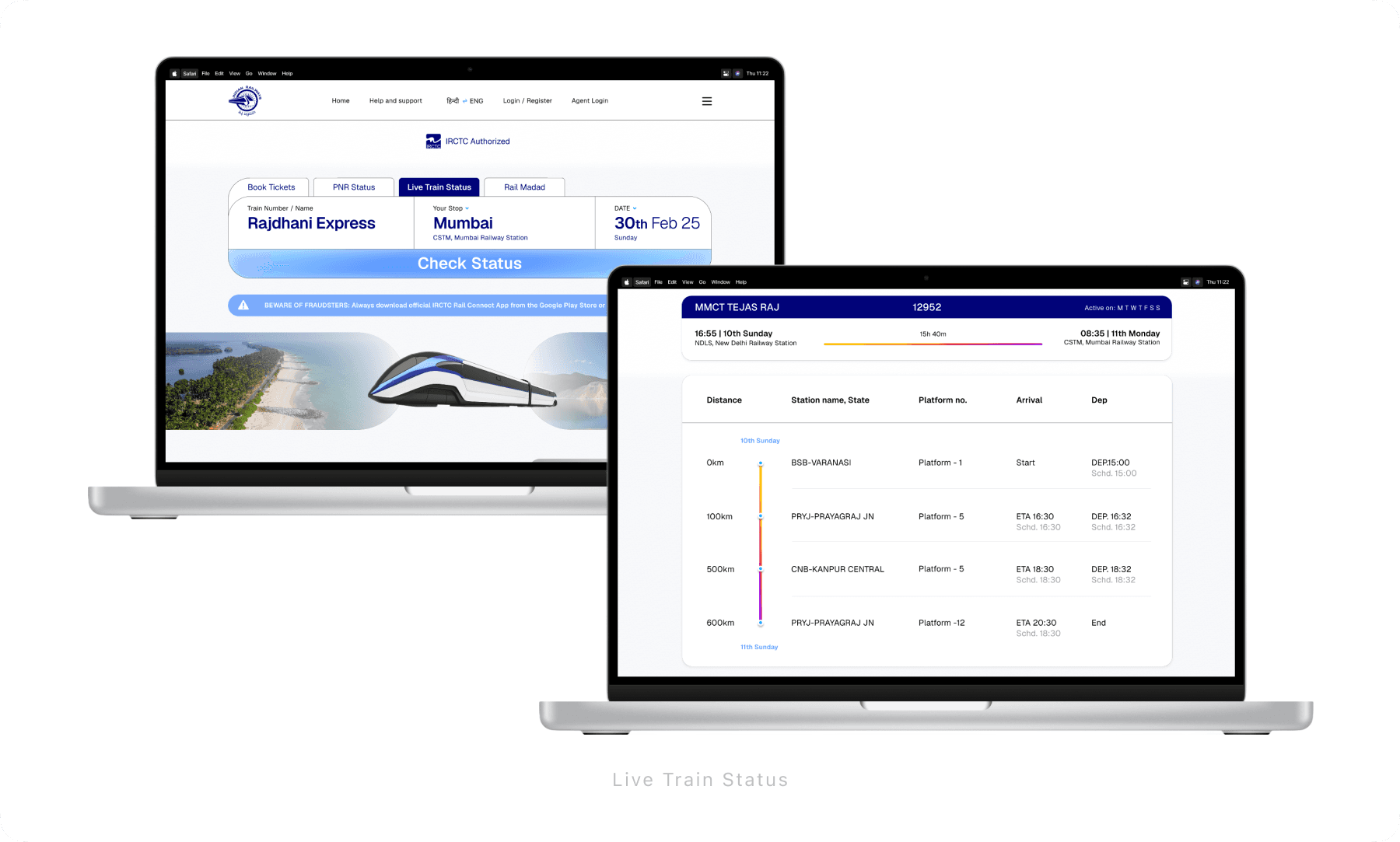
This design presents real-time train updates in a structured, readable format. It directly addresses the problem of unclear navigation and weak feedback by giving precise, accessible information without extra noise.

IRctc web revamp
A UX modernization of the IRCTC platform, serving 30M+ monthly users. This project focuses on transitioning a legacy system into a high-performance, inclusive interface that matches the intuitive standards of India’s leading digital apps.
Website
Mobile App
Content
2025
Year
Retail
Industry
UK, London
scascac
LSG Ad Agency
Client
LSG Ad Agency
Client
Check mobile version
Problem Statement
Despite its massive scale, IRCTC’s cluttered interface creates significant friction for beginners and semi-urban users. The current "chaos-driven" design hinders accessibility, forcing users to navigate a steep learning curve that contradicts modern Indian digital standards.
Research
KEY INSIGHT
Heuristic Evaluation:
UI & UX Friction
Visual Noise: Cluttered interface with inconsistent styling and poor contrast.
System Fragility: High-load failure (Tatkal) and weak feedback loops.
Navigation: Critical flows (PNR, refunds) are buried or disconnected.
Usability & Accessibility Gaps
Process Risk: Unreliable payment feedback and abrupt account disruptions.
Inclusivity Barriers: Poor screen reader support, missing focus indicators, and incomplete keyboard navigation.
Responsive Lack: Inconsistent experience across mobile and desktop.
Summarized : The research shows that IRCTC’s current design overwhelms users with clutter, unclear flows, and outdated UI patterns. Booking's already a stressful, time-sensitive task is made harder by poor usability and mobile performance. Users are eager for a streamlined, modern interface that provides clarity, confidence, and accessibility across devices.
Modernized logos, consistent brand colors, and gradient-based icons establish visual identity while maintaining clarity. This eliminates IRCTC’s visual inconsistency, making navigation intuitive and aiding accessibility with higher-contrast palettes.
A unified type system with strong hierarchy enhances readability, solving poor contrast and small text problems (Improves accessibility for a broad audience). Bold, accessible buttons with large hit areas increase usability across devices, reducing booking failures caused by unclear CTAs.
Consistent iconography and systematic spacing create visual rhythm, reducing cognitive load. This directly solves IRCTC’s inconsistent styling issue, while also improving accessibility by offering recognizable, scalable icons with better click targets.
The redesigned cards simplify visual hierarchy with clear images, concise text, and bold CTAs, reducing clutter. This solves IRCTC’s UI problem of information overload by making packages scannable and engaging, improving usability and accessibility with better contrast and icon clarity.
The clean homepage prioritizes ticket booking with smart search and minimal distractions, unlike IRCTC’s banner-heavy entry point. Hover-access services and announcements improve navigation clarity while maintaining brand consistency across devices.
By separating inputs and showing filtered results with clarity, this design removes clutter and inconsistent styling. It tackles decision fatigue by displaying relevant train classes and statuses upfront, making selection effortless. Using green, yellow, and red colors to signify which train seat availability implies, even if one isn't educated about them, this again provides clarity in the decision-making process and reduces mistakes.
This design presents real-time train updates in a structured, readable format. It directly addresses the problem of unclear navigation and weak feedback by giving precise, accessible information without extra noise.
The structured gateway with multiple options solves unpredictability in payments. Clear separation of login, passenger info, and payment reduces friction and provides strong progress indicators compared to IRCTC’s disorganized checkout, all in all clean layout without stressing the user, and not letting them feel lost as the status bar on top provides double reassurance.
The simplified PNR input and clean passenger details improve legibility and reduce clutter. It solves usability gaps by making booking status instantly clear, unlike IRCTC’s cluttered tables that overwhelm users.
This design presents real-time train updates in a structured, readable format. It directly addresses the problem of unclear navigation and weak feedback by giving precise, accessible information without extra noise.
IRctc web revamp
A UX modernization of the IRCTC platform, serving 30M+ monthly users. This project focuses on transitioning a legacy system into a high-performance, inclusive interface that matches the intuitive standards of India’s leading digital apps.
Website
Mobile App
Content
2025
Year
Retail
Industry
UK, London
scascac
LSG Ad Agency
Client
LSG Ad Agency
Client
Check mobile version
Problem Statement
Despite its massive scale, IRCTC’s cluttered interface creates significant friction for beginners and semi-urban users. The current "chaos-driven" design hinders accessibility, forcing users to navigate a steep learning curve that contradicts modern Indian digital standards.
Research
KEY INSIGHT
Heuristic Evaluation:
UI & UX Friction
Visual Noise: Cluttered interface with inconsistent styling and poor contrast.
System Fragility: High-load failure (Tatkal) and weak feedback loops.
Navigation: Critical flows (PNR, refunds) are buried or disconnected.
Usability & Accessibility Gaps
Process Risk: Unreliable payment feedback and abrupt account disruptions.
Inclusivity Barriers: Poor screen reader support, missing focus indicators, and incomplete keyboard navigation.
Responsive Lack: Inconsistent experience across mobile and desktop.
Summarized : The research shows that IRCTC’s current design overwhelms users with clutter, unclear flows, and outdated UI patterns. Booking's already a stressful, time-sensitive task is made harder by poor usability and mobile performance. Users are eager for a streamlined, modern interface that provides clarity, confidence, and accessibility across devices.
Modernized logos, consistent brand colors, and gradient-based icons establish visual identity while maintaining clarity. This eliminates IRCTC’s visual inconsistency, making navigation intuitive and aiding accessibility with higher-contrast palettes.
A unified type system with strong hierarchy enhances readability, solving poor contrast and small text problems (Improves accessibility for a broad audience). Bold, accessible buttons with large hit areas increase usability across devices, reducing booking failures caused by unclear CTAs.
Consistent iconography and systematic spacing create visual rhythm, reducing cognitive load. This directly solves IRCTC’s inconsistent styling issue, while also improving accessibility by offering recognizable, scalable icons with better click targets.
The redesigned cards simplify visual hierarchy with clear images, concise text, and bold CTAs, reducing clutter. This solves IRCTC’s UI problem of information overload by making packages scannable and engaging, improving usability and accessibility with better contrast and icon clarity.
The clean homepage prioritizes ticket booking with smart search and minimal distractions, unlike IRCTC’s banner-heavy entry point. Hover-access services and announcements improve navigation clarity while maintaining brand consistency across devices.
By separating inputs and showing filtered results with clarity, this design removes clutter and inconsistent styling. It tackles decision fatigue by displaying relevant train classes and statuses upfront, making selection effortless. Using green, yellow, and red colors to signify which train seat availability implies, even if one isn't educated about them, this again provides clarity in the decision-making process and reduces mistakes.
This design presents real-time train updates in a structured, readable format. It directly addresses the problem of unclear navigation and weak feedback by giving precise, accessible information without extra noise.
The structured gateway with multiple options solves unpredictability in payments. Clear separation of login, passenger info, and payment reduces friction and provides strong progress indicators compared to IRCTC’s disorganized checkout, all in all clean layout without stressing the user, and not letting them feel lost as the status bar on top provides double reassurance.
The simplified PNR input and clean passenger details improve legibility and reduce clutter. It solves usability gaps by making booking status instantly clear, unlike IRCTC’s cluttered tables that overwhelm users.
This design presents real-time train updates in a structured, readable format. It directly addresses the problem of unclear navigation and weak feedback by giving precise, accessible information without extra noise.